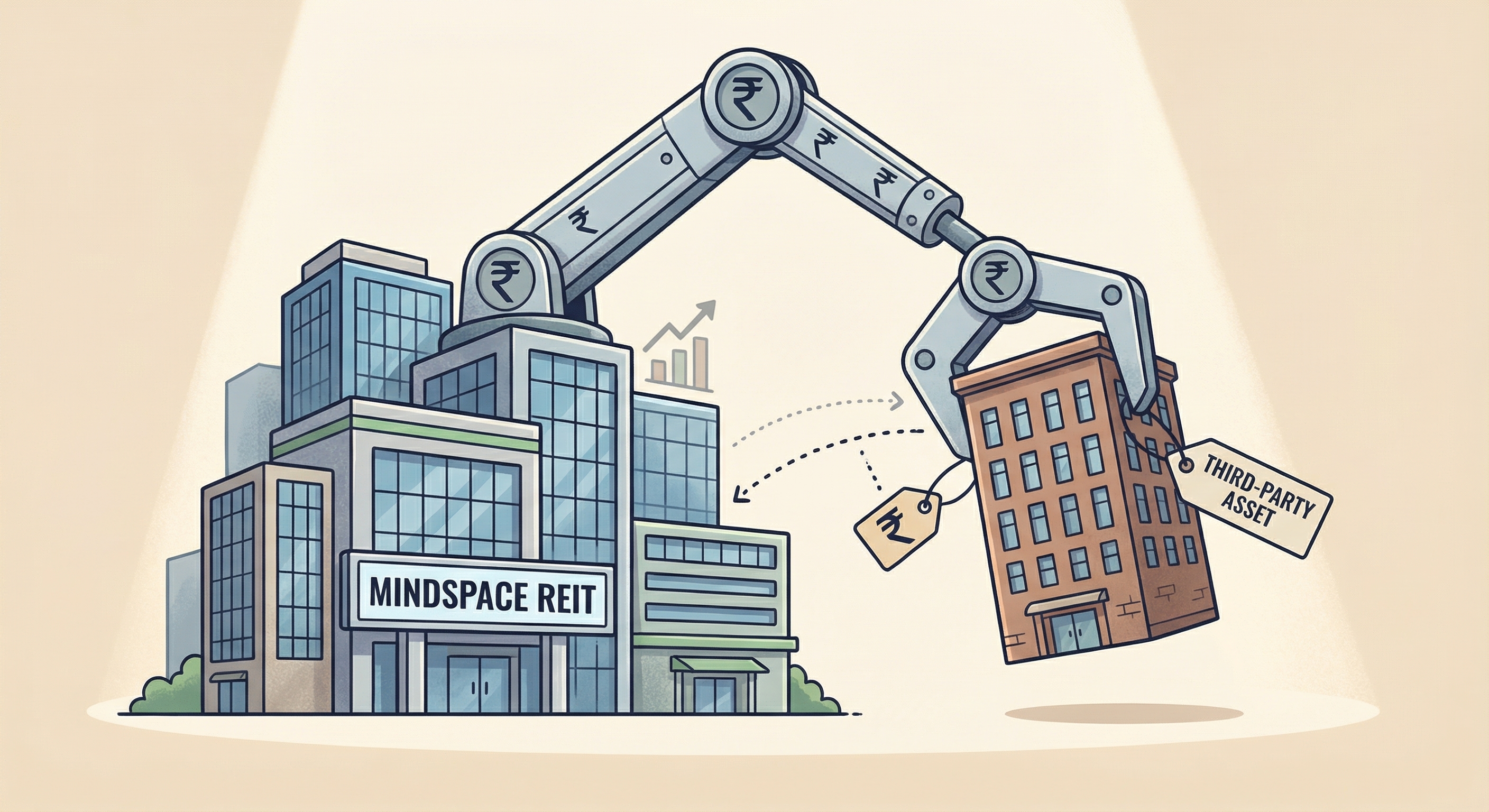
India’s real estate sector is experiencing a profound structural shift, and the drivers behind it are no longer individual investors or standalone developers—institutional capital is now steering the direction of the market. In the first half of 2025 alone, institutional real estate investments touched ₹2.5 billion, marking one of the strongest half-year periods in recent memory. The surge reflects the growing maturity of Indian real estate as an asset class, backed by transparent regulations, strong office absorption, and a stable macroeconomic environment.
For Propzine, Bengaluru’s homegrown proptech platform, this transformation offers deep insights into how institutional capital is reshaping demand patterns, asset preferences, and long-term development strategies across the country.
A High-Confidence Cycle: Institutional Investors Double Down on India
Institutional investors global private equity funds, sovereign wealth funds, pension funds, insurance firms, and global developers have been steadily increasing their exposure to India. H1 2025 has amplified this trend dramatically. The ₹2.5 billion deal volume signals not just a rebound but a long-term commitment to India’s real estate fundamentals.
These investors are drawn to India’s strong demographic growth, rapid urbanization, and rising corporate expansions across technology, BFSI, consulting, and GCC (Global Capability Centre) sectors. Unlike individual or domestic investors, institutions bring patient capital, focusing on long-horizon investments, stable yields, and portfolio-scale acquisitions.
Commercial Real Estate Dominates with a 62% Share: Offices, Warehousing & Retail Take Center Stage
Commercial real estate accounted for 62% of all institutional real estate deals in H1 2025, reaffirming its status as the most resilient property segment. Even with global uncertainties in work dynamics, India’s office market has displayed record absorption and low vacancy levels in top metros.
Institutional investors are prioritizing Grade-A commercial assets because they offer:
• Predictable rental income
• High occupancy from global tenants
• Long-term leases with escalation
• Market stability across cycles
• Strong reinvestment potential via REITs or secondary sales
The dominance of commercial assets signals a clear shift in institutional preference away from traditional residential investments and toward yield-driven property categories.
Grade-A Office Parks: The Cornerstone of Institutional Investment Strategies
Top-tier office parks remain the primary magnet for institutional money. Bengaluru, Hyderabad, and Pune continue to deliver India’s highest office absorption, driven by the expansion plans of IT, consulting, engineering, and GCC firms.
Institutional investors favour Grade-A office campuses because they feature:
• Global-quality infrastructure
• Diverse multinational tenant rosters
• Sustainability and ESG compliance
• High re-leasing potential
• Scalability for future expansion
These parks offer the rental stability and growth curve that long-term institutional capital demands, making them central to most portfolio acquisition strategies.
Warehouse & Logistics Hubs: India’s Fastest-Growing Institutional Asset Class
Alongside offices, logistics and warehousing platforms are attracting unprecedented institutional interest. The boom is driven by e-commerce, manufacturing expansion, 3PL operators, and government-backed initiatives like Gati Shakti and multimodal logistics parks.
Institutional investors are targeting:
• Large-format warehouses
• Grade-A industrial parks
• City-side distribution centres
• Integrated logistics hubs
These assets offer strong yields, low vacancy periods, and rapid scalability, making them a rising favourite among sovereign wealth and pension funds.
Conclusion: Institutional Capital Is Setting the Blueprint for India’s Next Real Estate Decade
The ₹2.5 billion institutional deal value in H1 2025 marks a pivotal moment for India’s real estate industry. With 62% of the capital flowing into commercial assets, institutional investors are clearly signalling what the next decade of Indian real estate will look like: scalable, high-quality, yield-driven, and globally aligned.
As Grade-A office parks, logistics hubs, and high-performing retail centres dominate acquisition pipelines, India is steadily evolving into one of the world’s most attractive real estate investment destinations. For Bengaluru—India’s commercial and innovation hub—this trend creates unmatched opportunities for developers, investors, and proptech platforms like Propzine to drive the next wave of real estate transformation.